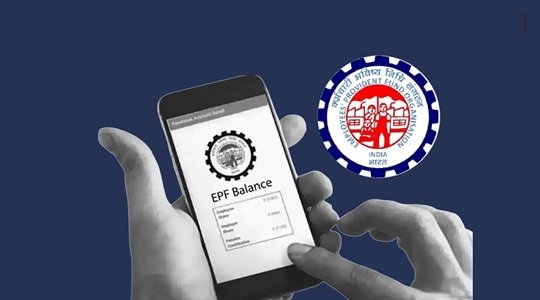
When a sudden medical bill, job gap, family crisis, house repair, or urgent financial need arrives, most people first think of personal loans, credit cards, or borrowing from relatives. But for salaried employees, there is one more option sitting quietly in the background: the Provident Fund account. Your PF is mainly built for retirement, but EPFO allows partial withdrawal or advance in approved situations. In daily language, people call it “borrowing from PF,” but technically it is not a loan. You do not repay it like a bank loan. It is an advance or partial withdrawal from your own EPF savings.
EPFO’s withdrawal rules have been simplified in recent reforms. The earlier multiple partial-withdrawal provisions were grouped into three broad categories: Essential Needs, Housing Needs, and Special Circumstances. Essential Needs include illness, education, and marriage, while Special Circumstances may cover urgent situations such as calamity, closure, unemployment-related stress, or similar hardship. The latest official updates also mention easier digital claims, reduced documentation, and minimum service requirement of 12 months for partial withdrawals.
What Is PF Advance?
PF advance means taking out a part of your EPF balance before retirement for a permitted reason. It is usually claimed through Form 31 or the online PF Advance option on the EPFO member portal. EPFO’s own claim-form page mentions that a member who wants an advance from the Provident Fund account should apply through the Composite Claim Form.
The important point is this: PF advance is not free extra money. It comes from your retirement corpus. So it should be used only when the expense is genuine and urgent.
When Can You Use PF Money for Emergency Expenses?
You can apply for PF advance for several urgent needs, depending on eligibility and available balance. Some common situations include:
Medical Emergency
This is one of the most common reasons for PF withdrawal. If the member, spouse, children, or dependent parents need treatment, PF advance can be used. It may help during hospitalisation, surgery, serious illness, or high medical bills.
Marriage or Education Expenses
EPF money can also be withdrawn for marriage or higher education needs. Recent EPFO reforms liberalised the number of withdrawals, with education withdrawals allowed up to 10 times and marriage withdrawals up to 5 times, subject to eligibility.
Housing or House Repair Needs
If the emergency is related to house purchase, construction, repayment of home loan, renovation, or major repair, PF advance may be available under the housing category. The exact amount depends on the purpose, balance, and EPFO rules.
Special Circumstances
EPFO has also kept a category for Special Circumstances. Earlier, members had to explain specific reasons like natural calamity, lockout, closure, continuous unemployment, or epidemic-related hardship. Under the simplified rules, members can apply under this category without assigning detailed reasons, reducing unnecessary rejection of claims.
How Much Money Can You Withdraw From PF?
The amount depends on the purpose, your PF balance, and EPFO’s eligibility rules. As per the Ministry of Labour’s 2025 year-end update, members can withdraw up to 75% of their PF balance, including both employee and employer contributions, with a minimum service requirement of 12 months for partial withdrawals.
However, you should not withdraw the maximum amount blindly. Always calculate how much you actually need. PF money earns interest and grows over many years. Taking out too much today can reduce your retirement safety later.
Basic Requirements Before Applying
Before you apply online, make sure these details are correct:
Your UAN should be activated. Your Aadhaar should be linked and verified. Your bank account must be linked with UAN. Your mobile number should be linked with Aadhaar because OTP verification is usually required. PAN details should also be updated, especially for tax and KYC purposes.
If your KYC is incomplete, the claim may get delayed or rejected.
Step-by-Step Process to Borrow Money From PF Account
Step 1: Check Your PF Balance
First, check how much money is available in your EPF account. You can check it through the EPFO passbook portal, UMANG app, SMS, or missed call facility. Do not apply without knowing your balance because the requested amount should be realistic.
Step 2: Login to EPFO Member Portal
Visit the EPFO member e-Sewa portal and login with your UAN, password, and captcha. After login, check whether your personal details, Aadhaar, PAN, and bank details are correct.
Step 3: Go to Online Services
Click on “Online Services” and then choose the claim option. In many cases, you will see options related to Form 31, Form 19, Form 10C, or Form 10D. For advance or partial withdrawal, you generally need PF Advance/Form 31.
Step 4: Verify Bank Details
The portal may ask you to enter the last four digits of your bank account number for verification. Enter it carefully. If the bank account is wrong, the payment can fail.
Step 5: Select Reason for Withdrawal
Choose the correct reason, such as illness, education, marriage, housing need, or special circumstances. Do not select a random category just to get faster approval. A wrong reason may create rejection or later compliance issues.
Step 6: Enter Amount and Address
Enter the required amount. Keep it practical. If your emergency expense is ₹50,000, there is no need to withdraw ₹2 lakh only because the portal allows a higher amount. Also fill in your address and other requested details.
Step 7: Upload Documents, If Asked
EPFO has reduced documentation in many cases, and official updates mention auto-settlement of withdrawals up to ₹5 lakh with mandatory cheque/passbook uploading dispensed with. Still, depending on the claim type and portal requirement, documents may sometimes be requested.
Step 8: Submit Through Aadhaar OTP
After filling the form, submit the claim using Aadhaar-based OTP verification. Once submitted, note the claim reference number.
Step 9: Track Claim Status
You can track the claim status on the EPFO portal under “Track Claim Status.” If the claim is approved, the money is credited directly to your registered bank account.
How Long Does PF Advance Take?
Many online claims are processed faster now because EPFO has moved toward digital verification and auto-settlement for eligible cases. However, the exact time depends on KYC status, bank verification, claim category, EPFO workload, and whether documents are required. If there is a mismatch in name, Aadhaar, bank account, date of birth, or employer details, delay is common.
Common Reasons for PF Claim Rejection
PF claims are often rejected because of incorrect bank details, Aadhaar mismatch, inactive UAN, incomplete KYC, wrong withdrawal category, ineligible service period, invalid documents, or difference between EPFO records and Aadhaar/PAN data.
Before applying, check everything carefully. A small spelling mismatch can create unnecessary trouble.
Should You Use PF Money for Every Emergency?
PF money should be your serious emergency backup, not your first spending source. For small needs, it may be better to use savings, emergency fund, or short-term family support. PF withdrawal makes sense when the expense is urgent, unavoidable, and bigger than your normal savings.
For example, hospital expenses, job-loss survival, essential house repair, or unavoidable family responsibility may justify PF advance. But using PF money for shopping, travel, luxury functions, or casual expenses is financially weak planning.
FAQs
Q1. Is PF advance the same as a loan?
No. PF advance is not a loan in the normal sense. You are withdrawing money from your own EPF account. You do not repay it through EMIs, but your retirement balance gets reduced.
Q2. Can I withdraw PF money while still working?
Yes, partial withdrawal is allowed while working, but only under permitted categories such as essential needs, housing needs, or special circumstances. Full withdrawal is generally linked to retirement or unemployment rules.
Q3. Will PF advance affect my pension?
PF advance is taken mainly from the provident fund balance, but frequent withdrawals can reduce long-term retirement savings. Pension-related benefits depend on EPS rules and service history, so members should avoid unnecessary withdrawals.
Q4. What should I do if my PF advance claim is rejected?
First check the rejection reason on the EPFO portal. Correct KYC mismatch, bank details, Aadhaar linking, or document issues. If the reason is unclear, raise a grievance through EPFiGMS or contact the EPFO office linked to your establishment.