No, running a pet grooming salon without the required local licences and registrations is not legally safe in India. While there is no single central “pet grooming licence,” the business still falls under municipal trade licensing, Shops and Establishments registration, animal welfare rules, and in many cases GST and fire/health clearances — skipping these can lead to fines, sealing of premises, or closure orders.
Pet grooming has grown quickly as a business in Indian cities, and many groomers start out informally — a home setup, a rented shop, or a mobile van, with a good Instagram page and word-of-mouth clients. It feels like a low-risk, low-paperwork business compared to something like a restaurant or clinic. But a grooming salon still touches multiple layers of law: it is a commercial establishment, it handles chemicals and equipment, it deals with live animals, and in many cities it falls within municipal health and safety oversight. The absence of one single “pet grooming licence” does not mean the business is licence-free.
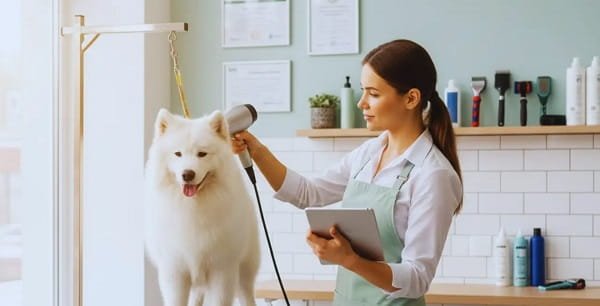
Why People Assume Pet Grooming Needs No Licence
Unlike a veterinary clinic, which clearly requires registration under the Indian Veterinary Council Act and state veterinary council rules, grooming is not classified as a medical or surgical activity. This creates a common misconception that grooming is an unregulated, purely cosmetic service, similar to a salon for humans, and therefore free of compliance requirements.
This assumption is only partly correct. Grooming does not need veterinary registration if no medical procedures, injections, or treatments are performed. But the moment a groomer operates from a fixed commercial premises, employs staff, generates revenue, and serves the public, it becomes a regular commercial establishment — and commercial establishments in India are governed by local and state laws regardless of the specific trade.
What Licences Actually Apply to a Grooming Salon?
Shops and Establishments Registration: Most states require any commercial premises employing staff or operating for trade to register under the state’s Shops and Establishments Act within a prescribed period of starting operations. This is one of the most commonly skipped registrations by small groomers.
Municipal Trade Licence: Local municipal corporations typically require a trade licence for any commercial activity conducted from a physical premises within their jurisdiction. This licence confirms the space meets basic safety, sanitation, and zoning requirements for the type of trade being carried out.
GST Registration: If annual turnover crosses the threshold prescribed under the GST law (generally ₹20 lakh for services in most states, lower in some special category states), the salon must register for GST and charge tax on grooming services accordingly.
Fire and Health NOCs: Depending on the size of the premises and local municipal rules, a fire safety no-objection certificate and a health trade licence from the municipal health department may also be required, particularly if the salon uses electrical grooming equipment, dryers, or heating tools.
What About Animal Welfare Laws?
This is where many grooming businesses face the most overlooked risk.
The Prevention of Cruelty to Animals Act, 1960, applies to any establishment handling animals, including grooming salons. Improper restraint techniques, unsafe use of clippers or dryers, lack of trained handling, or unsanitary conditions can attract liability under this Act if an animal is injured or mistreated during a grooming session.
Some states and municipal bodies are also beginning to require registration for pet-related commercial establishments — including boarding, breeding, and grooming — under evolving Animal Birth Control and pet business rules, particularly in metro cities. Even where a specific grooming registration does not exist yet, cruelty and negligence provisions still apply fully to grooming premises.
What Happens If a Salon Operates Without Proper Registration?
If a grooming salon operates without Shops and Establishments registration or a municipal trade licence, it is treated as an unregistered commercial establishment. Local authorities can issue notices, impose penalties, or in serious cases order the premises to be sealed until compliance is completed.
If the salon has crossed the GST threshold and is not registered, this is a separate tax default that can attract interest and penalty under GST law, in addition to the underlying tax liability itself.
If an animal is injured due to negligent handling, unsafe equipment, or unhygienic conditions, the absence of proper registration and standard operating procedures can worsen the salon’s position significantly if a complaint is filed with police or an animal welfare body, since it signals an unregulated, non-compliant setup.
Does a Home-Based Grooming Setup Need the Same Licences?
This is the practical grey area for many small operators.
A purely home-based groomer who visits clients’ homes with a mobile kit, and does not operate from a dedicated commercial premises, may fall outside strict Shops and Establishments registration in some states, since that law is generally premises-triggered. However, GST registration obligations still apply once turnover crosses the threshold, regardless of whether the business is run from home or a shop.
The moment the same person opens a dedicated grooming room, hires an assistant, or converts part of a residential property into a walk-in commercial space, the business shifts into commercial establishment territory, and local registration requirements typically apply.
Practical Example for Better Understanding
Suppose Priya starts a mobile pet grooming service, visiting client homes with her own equipment, with annual earnings of ₹4 lakh. In many states, she may not need Shops and Establishments registration since she has no fixed commercial premises, and she is also below the GST threshold, so her compliance burden is minimal — though she should still follow basic animal handling safety practices.
Now suppose Priya opens a small grooming studio in a rented shop, hires one assistant, and her annual revenue crosses ₹25 lakh. She now needs Shops and Establishments registration, a municipal trade licence, and GST registration, since she has crossed the threshold, operates from a fixed premises, and employs staff.
Now take a case where a grooming salon uses an unsafe drying cage and an animal is injured during a session. Even if the salon is otherwise unregistered, the owner can face liability under the Prevention of Cruelty to Animals Act independently of the licensing default, and the lack of registration will likely be treated as an aggravating factor by authorities.
What Should a Groomer Check Before Starting the Business?
Before opening a pet grooming salon, the owner should check the applicable Shops and Establishments Act requirements in their state, confirm whether the premises needs a municipal trade licence, and track turnover against the GST registration threshold. Staff handling animals should be trained in safe restraint and equipment use, and basic hygiene protocols should be documented.
The safest approach is simple: treat pet grooming as a regular commercial service business first, and layer animal-handling safety on top of that — do not assume that “no dedicated pet grooming law” means no compliance is required at all.
FAQs
Q: Is a veterinary licence required to run a pet grooming salon?
A: No, a veterinary licence is not required for grooming alone, since grooming is not classified as a medical or surgical activity. A veterinary licence becomes relevant only if the salon also offers medical treatments, injections, or procedures.
Q: Can a pet grooming salon be shut down for lack of registration?
A: Yes. Local municipal authorities can issue notices and, in serious cases, order sealing of premises operating without required Shops and Establishments registration or a trade licence.
Q: Does a small home-based groomer need GST registration?
A: Only once annual turnover crosses the prescribed GST threshold for services. Below that threshold, GST registration is generally not mandatory, regardless of whether the business is home-based or shop-based.
Q: What law applies if a pet is injured during grooming?
A: The Prevention of Cruelty to Animals Act, 1960, can apply if injury results from negligent handling, unsafe equipment, or unhygienic conditions, regardless of whether the salon is otherwise licensed.